
Factory. Data centre. Office tower. Doesn’t matter which one you’re running, eventually someone asks the same question: air-cooled or water-cooled? And the answer sticks with you for years, built right into every electricity bill that lands on your desk after. Get it wrong and you’re either overpaying monthly or watching a system choke the moment Malaysian heat hits its stride.
This isn’t a sales pitch. Just the practical stuff that actually matters once you’re the one signing off on equipment.
What Are Air-Cooled and Water-Cooled Chillers?
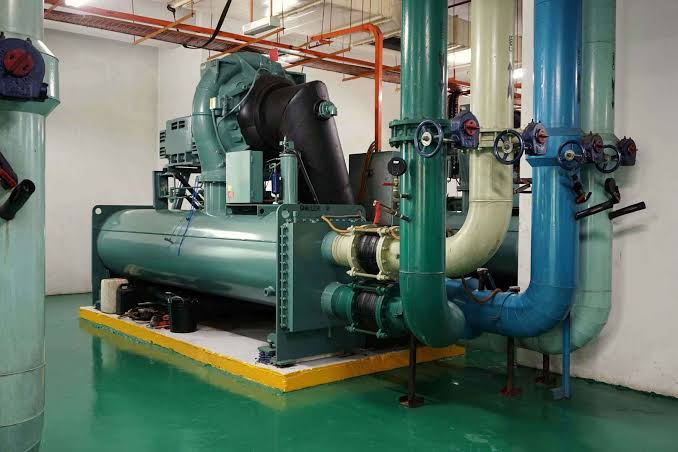
Both pull heat out of water used to cool a building or a process. That part’s identical. Where they split is how that heat gets kicked outside. Air-cooled chillers blast it straight into the outdoor air, fans and condenser coils doing the work, all crammed into one unit that doesn’t need help from anything else. Water-cooled chillers? Different story. They lean on a separate cooling tower, using water itself to carry heat off before it loops back cooled.
How Do They Actually Work?
Air-cooled is almost boring in its simplicity. Heat comes out of the chilled water loop, runs through condenser coils, outdoor air blows across and carries the warmth off. One box. One job. Usually sitting up on a roof somewhere, minding its own business.
Water-cooled takes an extra lap. Heat moves into a separate condenser loop first, then travels out to a cooling tower where some of it evaporates away before the water heads back in, cooled down and ready to repeat the cycle. More moving parts, sure. But water hauls heat around far better than air ever could, and at bigger scales that difference actually shows up on your energy bill.
Key Differences Worth Knowing
Space, for starters. Air-cooled wants outdoor room with decent airflow and that’s basically it. Water-cooled wants room for the chiller AND the tower, plus pipes running between them.
Noise too. Fans running nonstop make air-cooled the louder option, while water-cooled stays relatively quiet indoors since the noisy bit lives outside. Lifespan? Water-cooled units often push past 20 years if maintained properly. Air-cooled typically tops out around 15 to 20, no surprise there given they sit outside baking in the sun year round.
Energy Efficiency: Who Wins?
Water-cooled, generally, especially once you’re talking about larger buildings. Water just moves heat better than air does, plain physics, and that shows up in stronger performance ratings. Still, air-cooled tech has come a long way. For a smaller building where the efficiency bump wouldn’t offset building an entire tower, air-cooled remains the smarter financial call.
Malaysia’s heat doesn’t let up much though. Humidity stays high basically year round. For large operations running cooling nonstop, water-cooled tends to pull ahead clearly here.
Installation Costs and Space
Simplicity wins on day one with air-cooled. Cheaper install, no tower to pour concrete for, way less pipework snaking through the building. Great option if budget’s tight or your rooftop’s already crowded.
Water-cooled costs more upfront, no way around it, you’re basically paying for two systems instead of one. But stretch the timeline out and the math often flips. Larger operations frequently recoup that extra cost through efficiency savings over the years. Comes down to how much cooling you actually need and how long the building’s sticking around.
Maintenance: What You’re Signing Up For
Air-cooled keeps things simple. One unit. One set of coils. Fewer parts means fewer things breaking at the same time, generally speaking.
Water-cooled asks for more attention, no sugarcoating it. Towers need consistent water treatment or you’re looking at scale, corrosion, algae, even Legionella risk if things go unchecked. Condenser tubes need cleaning too since mineral buildup slowly kills heat transfer efficiency. This is exactly why proper water treatment chemicals and routine monitoring aren’t optional extras. They’re the whole ballgame.
Water Use and Environmental Impact
Water-cooled systems drink water constantly through evaporation. Worth thinking about given some parts of Malaysia deal with water scarcity on and off. Air-cooled skips process water entirely, simpler choice wherever water access or cost is genuinely tight.
That said, water-cooled usually pulls less electricity for the same cooling job, which means a smaller carbon footprint overall even once you factor the water usage back in. Weighing those two against each other has become pretty standard in sustainability planning now.
Best Fit by Industry
Data centres, manufacturing plants, anywhere running heavy cooling nonstop, these usually lean water-cooled for the efficiency payoff at scale. Hospitals and pharma facilities tend to follow the same logic given their around-the-clock demands.
Smaller commercial spaces and retail? Air-cooled tends to win out there, simpler upkeep, lower overall fuss. Food processing and cold storage sit somewhere in between depending on size. No universal winner here. It’s entirely about what your operation actually needs.
Factors That Should Shape Your Decision
Cooling load first, always. Heavy, constant demand usually points toward water-cooled. From there, think about space, budget both now and later, how much water you’ve actually got access to, and whether your team can realistically keep up with maintenance.
Near residential areas? Noise restrictions might steer you too. And climate, obviously. Malaysia’s heat and humidity change the whole efficiency equation compared to somewhere cooler and drier, where air-cooled holds up noticeably better.
Where Each System Struggles
Air-cooled loses steam as temperatures climb, and that’s basically Malaysia’s weather for most of the year. Sitting outside constantly also means more wear building up over time.
Water-cooled has its own baggage. Skip proper water treatment and you’re looking at scaling, corrosion, microbial growth, the kind of stuff that can actually shut a facility down if it gets bad enough. Ongoing chemical dosing adds a layer of complexity air-cooled never has to deal with. Neither one’s perfect. They just fit different jobs.
How the Cooling Tower Actually Fits In
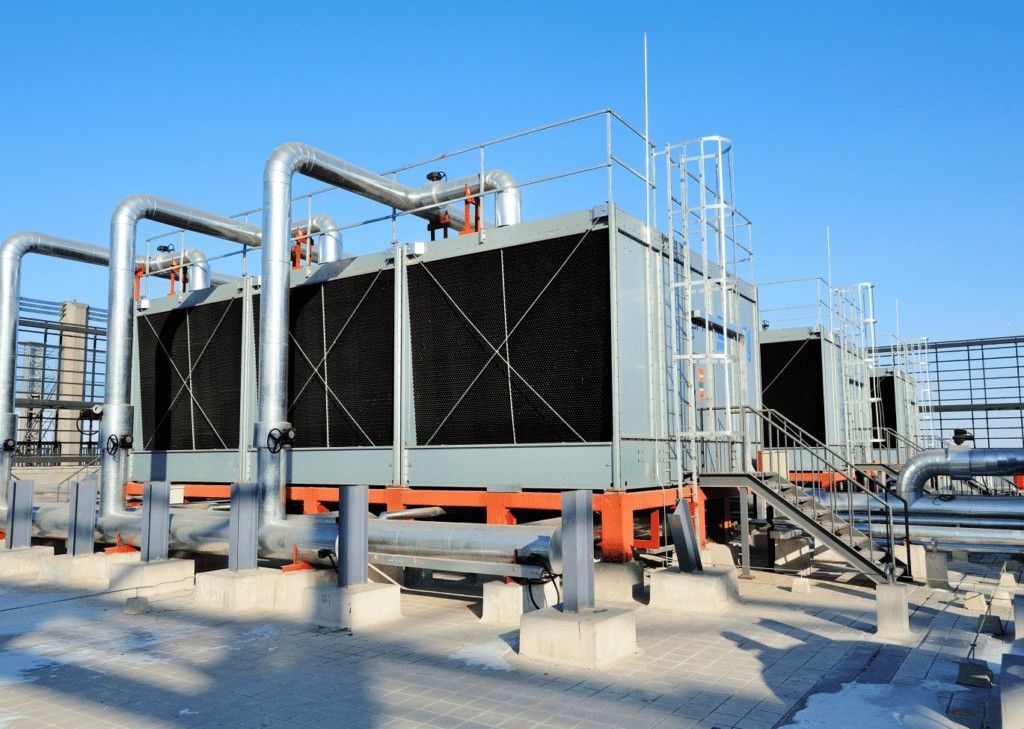
Think of the tower as the heat-dumping partner for a water-cooled chiller. Warm condenser water flows in, spreads across fill material built to maximise contact with moving air. Some of that water evaporates as air passes through, taking heat with it. What’s left, now cooled, collects at the bottom and heads back to the chiller to start the loop again.
That evaporation is exactly why water-cooled systems reject heat better than air-only setups can manage. It’s also exactly why skipping water treatment causes so much trouble down the line.
Signs It’s Time to Upgrade
Energy bills climbing even though your cooling demand hasn’t changed? That usually means efficiency’s slipping, often from scale buildup or just an ageing system running out of steam. Breakdowns happening more often, repair costs creeping up year after year, these are red flags too. If your facility’s outgrown what the current system was built for, upgrading isn’t really optional anymore, it’s just smart math. Past 15 to 20 years, a newer unit often pays for itself through energy savings alone within a few years.
Picking a Supplier You Can Actually Trust
Look for people who know your specific industry, not just general HVAC basics. Ask what happens after installation too, because these systems need ongoing attention, not a one-time visit and a handshake.
Water treatment expertise matters as much as the equipment itself. A chiller’s only as good as the water running through it, full stop. Local presence counts for a lot too, especially when you need fast support during Malaysia’s worst heat months. Don’t just chase the lowest quote. Weigh the whole package.
Why Techkem Water Technologies Stands Out
This is where Techkem Water Technologies comes into the picture. They’re not just moving equipment out the door. Techkem’s focus sits squarely on the water treatment side of cooling towers and chillers, the part most businesses ignore right up until scaling and corrosion start costing real money.
Established in boiler and cooling water treatment across Malaysia, Techkem works with industrial facilities to keep condenser water clean and properly balanced, away from the biological buildup that chips away at equipment quietly over time. Their approach blends specialty treatment chemicals with hands-on monitoring, keeping water-cooled systems running closer to peak efficiency for longer stretches. Their blog digs deeper into keeping industrial water systems healthy.
Conclusion
Honestly, there’s no single right answer between air-cooled and water-cooled. Depends entirely on your facility’s size, your budget, how much space you’ve got, and where you see things heading long term. What matters most is knowing the trade-offs going in, then actually following through with proper care once the system’s running, especially anywhere cooling towers and chillers work together in a water-cooled setup. Water treatment isn’t some extra line item you can skip. It’s the thing deciding whether you get the efficiency you paid for or not.

Recent Comments